
The truth about Interior Design TV Shows
Grab your popcorn, because Interior Design Masters is back on the BBC. And with it, my annual frustration. I believe it’s safe to say I am not the only interior designer who has a love-hate relationship with this show. On one hand, I know it’s just pure TV entertainment, and on the other, I dislike it because it’s damaging to the industry.
If we are really honest, the show does a major disservice to anyone trying to understand how real interior design works. If you've ever watched the series and thought, 'Oh, it’s that easy? And I can do it with so little money’, the answer is (and I’m holding your hand as I say this lovingly) NO.
This is not a post about dismissing the show, but about the unrealistic expectations it creates for people who genuinely need help. I believe (and this is a hill I will die on) that our homes are the most important place in our lives. It’s the only place where we can truly be ourselves, retreat from the world, rest and recharge.
Homes have the magical power of transforming the way you think about yourself, to help you let your guard down, rest, heal your nervous system, and even start to follow your dreams. But if that space is not done in a safe and grounded way, one that supports you, it can do more damage than good.
Here is why:
No.1 - Remember it’s all a show.
It’s a TV show. Entertainment. It’s all good fun until you realise the reality of interior renovations is completely different to what you see on TV (sometimes 180° different). Seeing that a room can be “done” in 2 days and with a budget of £1500 - £2000 for one room is highly misleading.
Any interior designer can tell you that if you want to redecorate or redesign a room properly and have a bare minimum standard (quality), it will take you so much more than that. Time and finances.
To make a comparison with the reality of the interiors, interior design projects can last at least a couple of months for one room, and at least 4 to 6 months for multiple rooms.
Why that long? Because you want to think through things properly. You want to make sure you have all your personal needs (what you want to do in that room - entertain friends, relax, read, rest, sleep, watch movies, etc.) taken into account. So that you can live easily, safely, and happily.
You don’t want to redo or keep editing the room once every couple of months, because it wasn’t quite right to begin with. This never ending curation can lead to a lot of stress, both mentally and financially. It also does not benefit anyone except maybe high street shops, who get to sell more (but that is a different post for another time).
No.2 - The timeline is unrealistic.
2 days for a room is not enough time. The paint barely has time to dry in 2 days, let alone build any bespoke piece around it. Have you ever tried putting together IKEA furniture on your own or with a friend? How long did that take you? If you had help, of course, things would go faster.
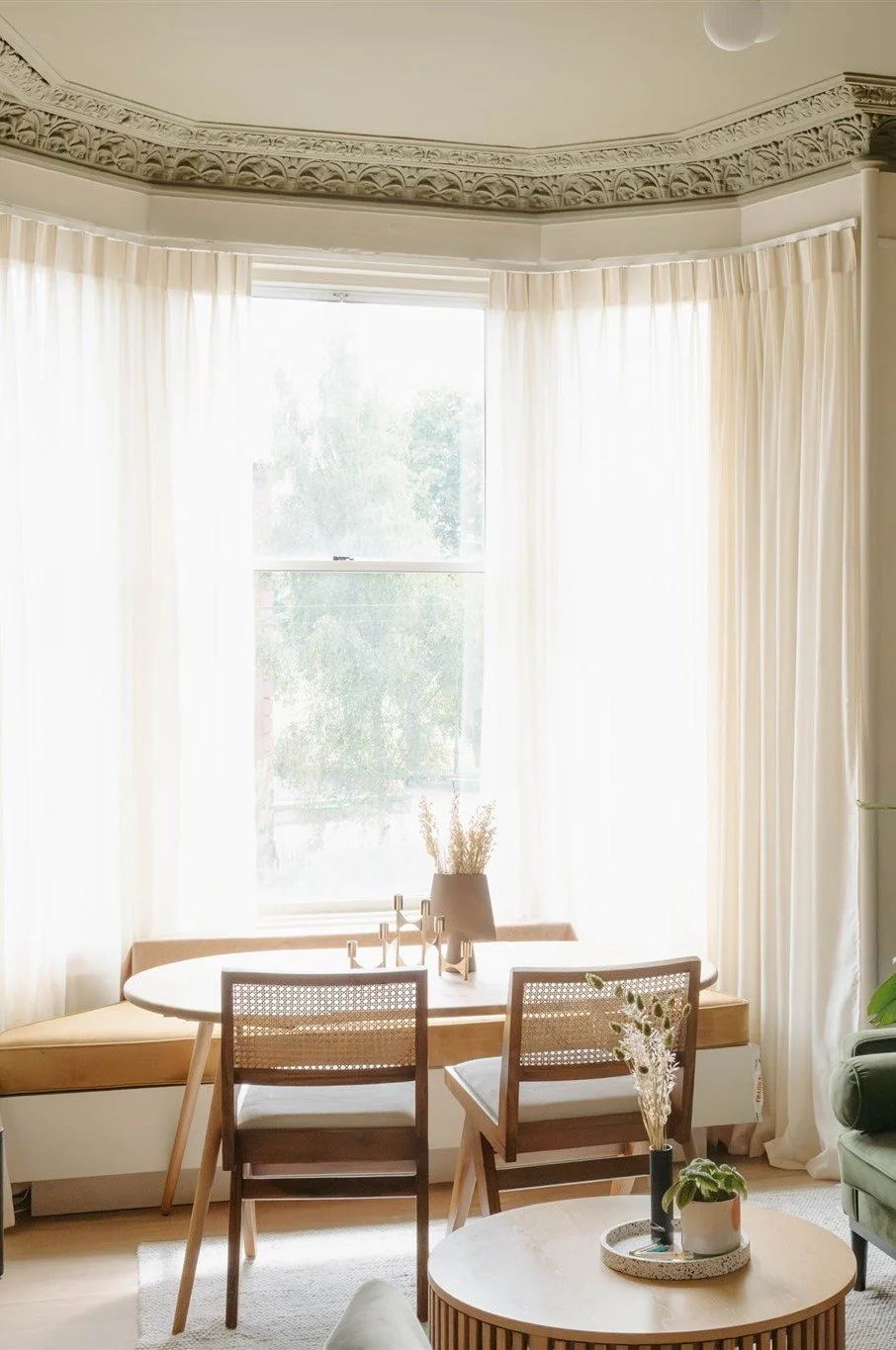
Image by Studio Gently, Design and Styling ©Detail Movement
However, even tradesmen need to know exactly what you want to build, have all the exact measurements and details of your “design” before starting work, all the materials on site and on hand, for precisely this reason - to avoid wasting time.
TV shows do not show the time designers spend creating the design, sourcing fabrics, colours, furniture, ordering everything, and delivery times. All of that time is edited out because it wouldn’t be “of interest” or entertaining.
Not to mention the time it really takes tradesmen to do their job properly, not rushed. Because we all know that when we rush things, mistakes happen. And mistakes cost time, energy, stress and money.
These shows only show a fraction of the process. In the grand scheme of things (a.k.a the timeline of a project), what you see on these TV shows would be the equivalent of a few rushed minutes.
They don’t show all the time spent on research, design, finding the trades, the actual work on the room, all the unexpected problems that happen on-site (and believe me, they do happen), that can cause delays, etc.
Sometimes, on real interior design projects, it takes 2 days just to meet with trades and go through the design, check that everyone understands what needs to be done, and make sure the design can actually be built.
Not to mention, coordinating a time to meet with trades, because everybody has a busy schedule.
So, how long does a room take to be made, then?
It really depends on the design and the quality you want to achieve. But as I mentioned above, it can take at least a couple of months to design it properly, find all the right materials and furniture, have the items delivered, find the right tradesmen to do the work (be it painting, creating bespoke items, tiling, demo, cleaning up after), etc.
But as a rule of thumb, it takes at least 2 months or more. Then the actual work on the room, depending on the complexity of the design and how many people are working on the room, can take from 1 to 2 weeks or more.
No. 3 – The budget is unrealistic.
Of course, you can redecorate a room with a budget of £1500 - £2000, as we’ve seen on the show. But do not expect to have the quality of a hotel room. Remember that a good armchair, for example, costs that much nowadays. That is the whole budget gone on one piece. You can absolutely work within this budget, but be prepared to have low quality items.
Let me put it this way. You don’t expect to go into Primark and find Ted Baker quality clothes. You get what you pay for. Yes, you can redecorate your room with this budget, but remember that you will have to sacrifice on the quality.
The problem with this long-term is the same as with everything: more money spent on repairs and replacements, and more waste created (not to mention that some of the items and materials needed to stay within this budget are of questionable ethics for both humans and the environment).
A better alternative would be to save up and buy the good quality item that you really wanted in the first place. I promise you, you will be happier in the long run, and you will have more peace of mind too (knowing it will last).
It’s also important to think about what items you need in the room and do a bit of research online to see how much things actually cost. It might be that you can only buy a couple of good items with £1.5k or go down the second hand furniture route (which is sometimes a gold mine in terms of item quality - price ratio).
No.4 – Quality
Every time I watch the series, it still blows my mind how many mistakes and items of poor quality are used in this race to create a “master interior”. Global warming is a real emergency, yet the TV shows promotes/encourages the use of so many items made of plastic, cheap paints & wallpapers, simply to fit into the budget (that is unrealistic anyway).
I know that with recent seasons, they’ve introduced a “soft” nudge to think more sustainably. I am happy to see more and more recycled items and inventive ideas (though some are of questionable functionality long term). However, using a few pieces while the materials used are cheaper (and probably toxic) is not enough.
Not thinking about how this is affecting the environment, how much pollution went into making these items, or how they affect a person’s way of living long term is really concerning.
I don’t even want to touch on the trend I am seeing on the show about painting existing fabrics with what is effectively (probably) cheap wall paint with a concerning amount of VOCs.
We know (most of us anyway) that these rooms are being redone after the show because of all the things I am pointing out. So then, what is the point of the show? Besides entertaining and creating so much waste?
Interior design and the construction industry in general are responsible for about 37 - 40% of all global energy-related carbon emissions and global warming impacts. With the Materials, Construction, and Interior Fit-Outs (basically renovations), about 9 - 13% share of global emissions. We need to take this more seriously. More about this here and here.
The home should be a sanctuary, a place where you relax, where life is easy, not harder.
I know the contestants are not necessarily trained designers, and that is the whole point of the show. To give a chance to grow and learn. Which is amazing, as I know I’ve learned so much from being on sites and from tradesmen.
However, creating a design for the looks at the expense of functionality and long term maintenance is a sure way to make sure the design will fail. And I know the judges see these things. They know these designs are not suitable or usable in some cases. If it crossed my mind, I am sure it crossed theirs, too.
Which begs the biggest question about this show: why are we creating a show that just creates waste? Just for fun?
Ok, so what can you do instead? If you want to redesign your home?
1. Work with an interior designer
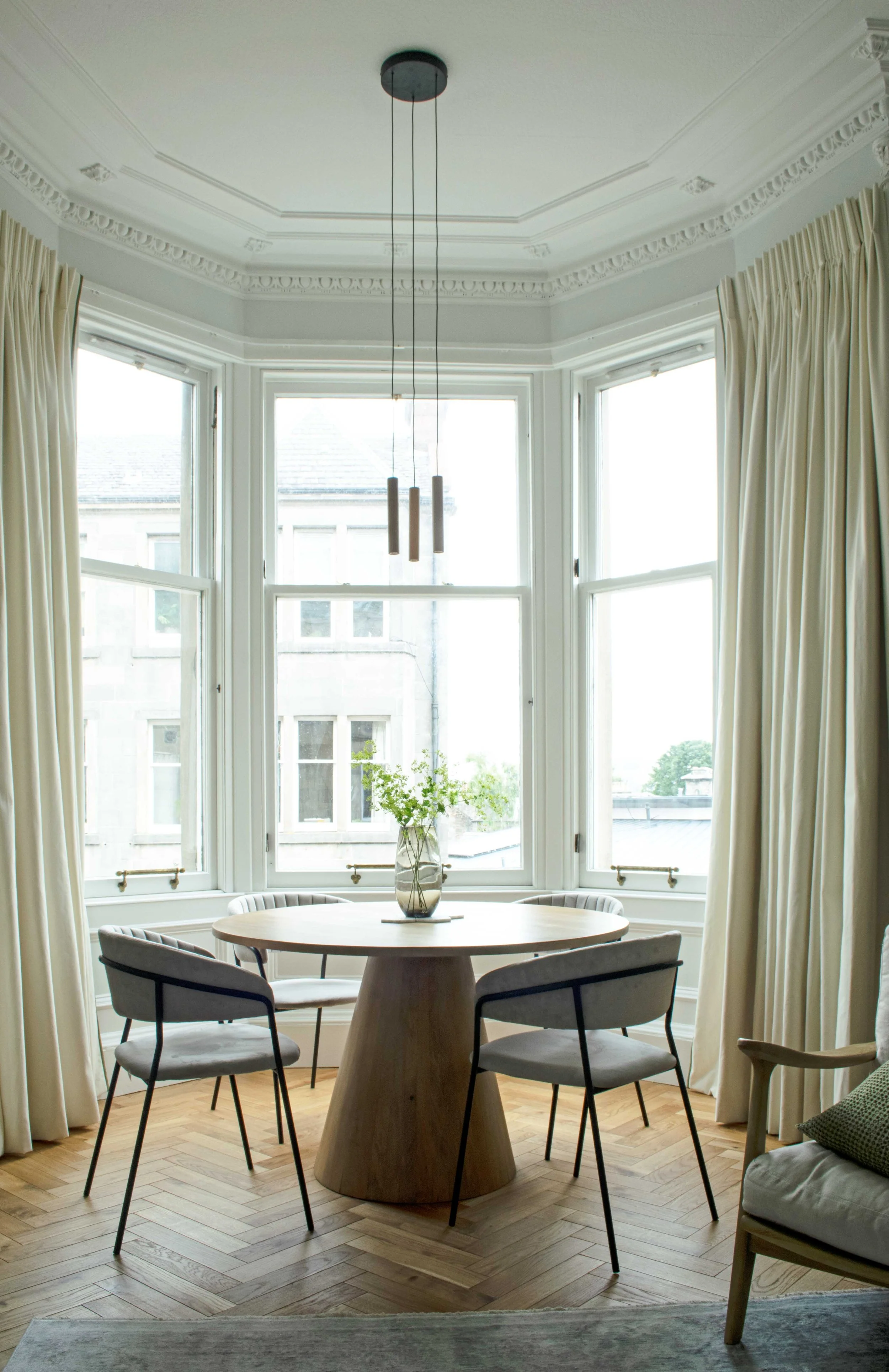
Design, style and image by ©Detail Movement
If you are a fan of DIY and don’t mind doing everything on your own, great. I hope you create a gorgeous project. But for those who feel overwhelmed by the amount of things to think of, design, decisions to be made, suppliers and trades to chase and oversee, approve things, pay for things, make sure they are delivered on time, and more, the answer is simple.
Work with an interior designer.
An interior designer can help you in so many ways. They can see potential issues, create a design that is functional and safe for you to live in, make sure your needs are included in the design, and so much more.
It is not a waste of money. On the contrary, it’s an investment in your peace of mind, a helping hand, experience and expertise, lower stress, and your home. Not to mention the time and money saved on “trying things out”.
2. Take your time & don’t rush into things.
RESEARCH - plan and do things in phases. If you don’t have a reason to do things urgently, it’s important to take the time and think things through properly.
Your home is a sanctuary; it's important that it makes your life easy, helps you live safely in it, and allows you to thrive, not stress you out.
Not to mention that by doing the research and planning, you’ll be able to save time and money by minimising mistakes later down the line.
3. Create a realistic budget
There are a couple of ways you can do this, but the most effective way to get a general idea of how much you would need is to just make a list of all the items you want to have in your room or what you want to do in that room.
For example, if you are working on your living room, do you want to entertain or just watch TV with the family? Do you want to play games or work in this space as well? Do you want to read in there, too? And so on.
Don’t forget to think about “odd” things such as light switches, sockets, radiators, skirting boards, flooring, etc. These are items that often affect the overall look and could end up taking a big chunk of your total budget if you did not factor them in from the beginning.
Interior design is not all about picking paint colours and cushions (as it’s portrayed on these TV shows). It’s about so much more than that.
After you put together this list, you can do a little research online and find some general prices for each item. This gives you an idea about how much everything could actually cost you (furniture and trades).
Remember, these TV shows do not include the design cost or tradesmen (or tradeswomen) cost. What you see on TV is basically saying that the designers and traders work for free. Which, let’s be honest, never happens in real life.
4. Look for trades early on
If you have all the design bits and furniture sorted, the next important step is to find the right people to make it. Usually, trades are very much in demand. You won’t find one that is available to start next week or tomorrow. If you do, it might mean that they are either at the beginning of their career or don’t have any projects going on (and I’d be a bit wary of that).
Which is why it’s important to do your research on them. Look for reviews, for examples of their work. If they come recommended, then ask what they worked on. If you are planning to do a kitchen, but the person recommending them only used them to paint their room, do they have the experience to take on a kitchen reno?
Do your due diligence and then meet with them. They need to see the space anyway to give you a quote for the work. But see if they raise any potential issues, or mention things you didn’t think about that might affect your budget.
A skilled trade will ask you a lot of questions about the work, so they are not surprised with more work later down the line, when they don’t have the time for it. But it’s a sneak peek for you into their mind, and see how they approach things.
At the end of the day, remember, these kinds of TV shows are just entertainment. They do not reflect the real prices and timelines in the industry.
I know there are TV shows like Grand Designs, which show the reality of a build and renovation, and they are still going strong (at the time of writing this). So there is an audience for this. Might not be as entertaining, but they are more accurate.
Interior Design Masters doesn’t need to be cancelled. It just needs to make a few tweaks:
Giving contestants more time to do a room (I’d say realistically, at least a week) and a bigger budget,
Stating that trades are being paid (I really hope they are),
And even sharing the contestants’ process of thinking when designing would make a big difference.
It wouldn’t change much for the show or the audience, but it would be a welcoming change for the industry and help people have more realistic expectations about how much it takes (and costs) to renovate their homes.
If you are thinking ok, that’s all good but where do you even start? Don’t worry. I am here for you. I know renovating often feels like an overwhelming task, but the good news is that you don’t have to do anything alone.
I have different design services specifically designed to help you, no matter where you are in your design journey. If you only need help to come up with the design idea, put together a design budget estimate, or help to design your whole home, please do reach out. It would be my pleasure to help you.
Looking forward to hearing from you!
Raluca x
Join out Thoughtful Edit
The “Thoughtful Edit” interior newsletter. A newsletter unlike any other where the content is shaped by the community for the community, to serve the community.
All images that are credited as '©Detail Movement', are done by Raluca Vaduva for Detail Movement. All rights reserved. All pictures that are not my own, I credit them to the best of my knowledge & research, to their offline/online sources. I do not claim ownership over them in any way. If you see your picture on this site and do not wish for it to be displayed, please get in touch and I will remove it or add additional notes at your request.